Serving Gloucestershire & Surrounding Areas

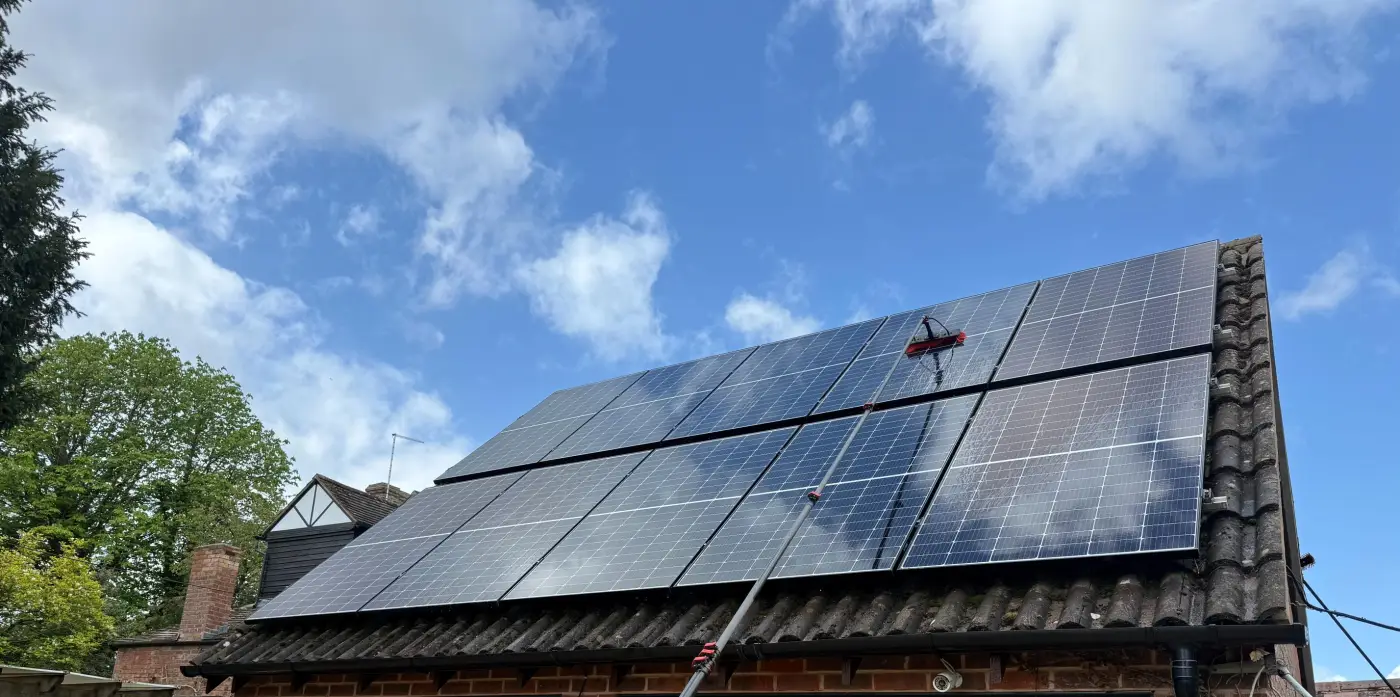
Solar panels spend every day exposed to the elements. Dust, pollen, traffic pollution, bird droppings and other debris can gradually settle on the glass, potentially reducing the amount of sunlight reaching the cells underneath.
Although solar panels are designed for outdoor use, cleaning them is not as simple as spraying the roof with a pressure washer. The wrong water, equipment or technique could leave deposits, scratch the glass or damage parts of the installation. Here is what property owners should know about safe solar panel cleaning.
Safe solar panel cleaning at a glance
- Check the panel manufacturer’s cleaning instructions first.
- Clean only when the modules are cool and in low-light conditions.
- Use purified or deionised water and equipment free from grit.
- Choose a soft, non-abrasive specialist brush.
- Avoid pressure washers, harsh chemicals and abrasive tools.
- Never stand, kneel or place equipment on solar modules.
- Stop if you see damaged glass, cables, seals or connectors.
Safety first: Solar panels are part of a live electrical installation. If there is visible damage, exposed wiring or any doubt about the system’s condition, do not introduce water. Ask a suitably qualified solar installer or electrician to inspect it.
Why do solar panels become dirty?
Rain can remove some loose surface dust, particularly from panels installed at a steeper angle. However, it may not remove everything.
Common sources of contamination include:
- Bird droppings
- Pollen and airborne dust
- Traffic pollution
- Leaves and organic debris
- Insects
- Mineral deposits from water
- Dirt collecting around the lower edges of panels
Periods of damp weather followed by dry conditions can make matters worse. Moisture may combine with dust and other particles before drying into a more stubborn layer on the glass.
The effect will vary according to the panel angle, surrounding trees, local bird activity, weather and nearby roads or farmland. Panels should therefore be assessed according to their actual condition rather than cleaned according to an arbitrary schedule.
Why the correct cleaning method matters
Solar modules have a protective glass surface that may include an anti-reflective coating. This surface needs to be treated carefully.
Manufacturer guidance commonly warns against abrasive tools, aggressive chemicals and excessive water pressure. These methods can potentially scratch the glass, affect protective coatings or place unnecessary pressure on the modules and their seals.
Solar panels are also part of a live electrical installation. Damaged glass, exposed wiring or faulty connections can present a serious hazard, particularly when water is introduced. Before any cleaning begins, the installation should be checked for visible damage. Roof access and electrical safety must also be considered.
Why purified water is recommended
Ordinary tap water contains different levels of dissolved minerals. When the water dries, these minerals may remain on the panel as spots or scale.
Purified or deionised water has had these minerals removed. It can therefore rinse the surface clean without leaving the same level of residue behind.
Water used on solar panels should also be free from grit. Even very small particles trapped in a cloth or brush could mark the glass when moved across its surface. For professional cleaning, purified water combined with suitable non-abrasive equipment provides a gentle way to remove contamination without relying on strong chemicals.
Solar panels should be cool before cleaning
Cleaning hot panels with much colder water can create a rapid temperature change known as thermal shock. In extreme circumstances, this could stress the glass and contribute to cracking.
Panels are generally cooler during the early morning, evening or other low-light conditions. Working at these times also means the system is producing less electricity. The water should be reasonably close to the surrounding temperature rather than significantly hotter or colder than the panels.
Why pressure washers should be avoided
A pressure washer might appear to offer a quick solution, but concentrated water pressure can be unsuitable for solar modules. It may place excessive force on:
- Panel seals
- Frames and mounting points
- Electrical connectors
- Junction boxes
- Protective surface coatings
Manufacturer instructions, including GB Solar’s module-cleaning guidance, advise against using pressure washers or high-pressure hoses on solar modules. A controlled, low-pressure purified-water system and a soft specialist brush provide a much safer approach.
Safe, specialist cleaning
Are your solar panels visibly dirty?
Send us a few details and property photos for a free, no-obligation quotation.
Avoid abrasive tools and household chemicals
Stubborn bird droppings or dried-on dirt should never be attacked with a blade, scouring pad or harsh scrubbing brush.
Abrasive cleaning can create fine scratches that may be difficult to see from the ground. Strong acidic, alkaline or degreasing products may also be unsuitable for panel glass and protective coatings.
Professional cleaning usually relies on:
- Purified or deionised water
- A soft, non-abrasive brush
- Gentle agitation
- A thorough rinse
- Suitable extension equipment for safe access
Any cleaning product should comply with the instructions supplied by the panel manufacturer.
Never walk on solar panels
Solar modules are not designed to be used as a working platform. Standing, kneeling or placing heavy equipment on them could cause visible damage or microscopic cracks within the cells.
Professional equipment allows many installations to be cleaned from a safer position without walking across the array. Where roof access is required, it should only be undertaken by someone with the appropriate training, equipment, insurance and understanding of the risks.
Professional solar panel cleaning in practice
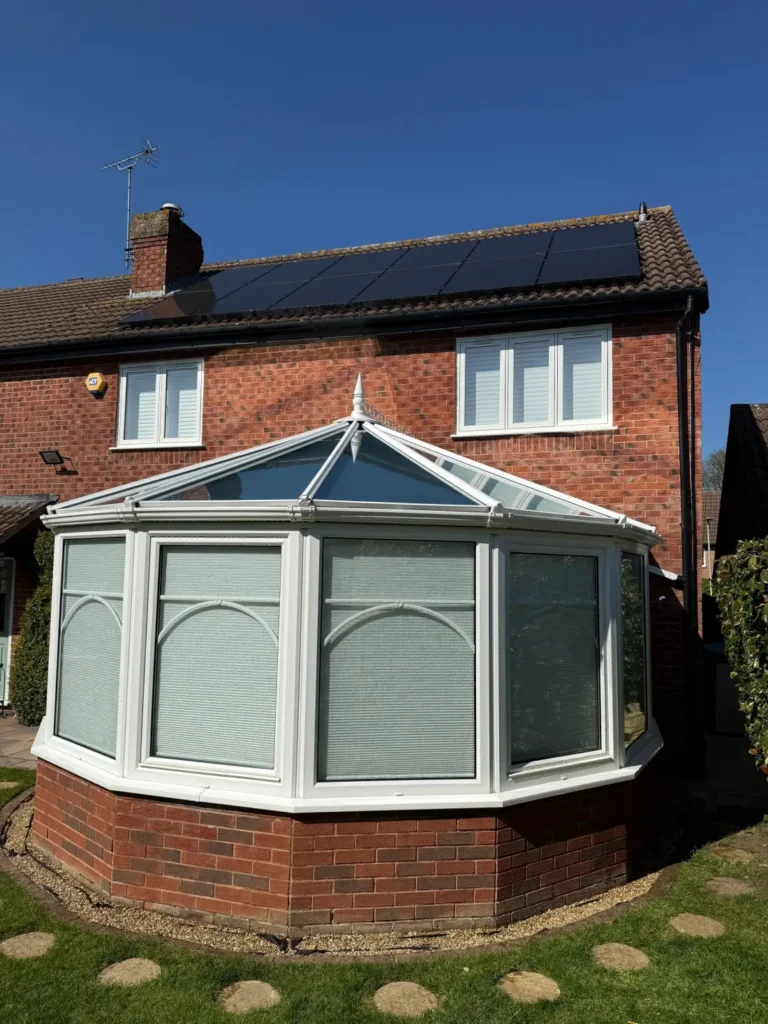
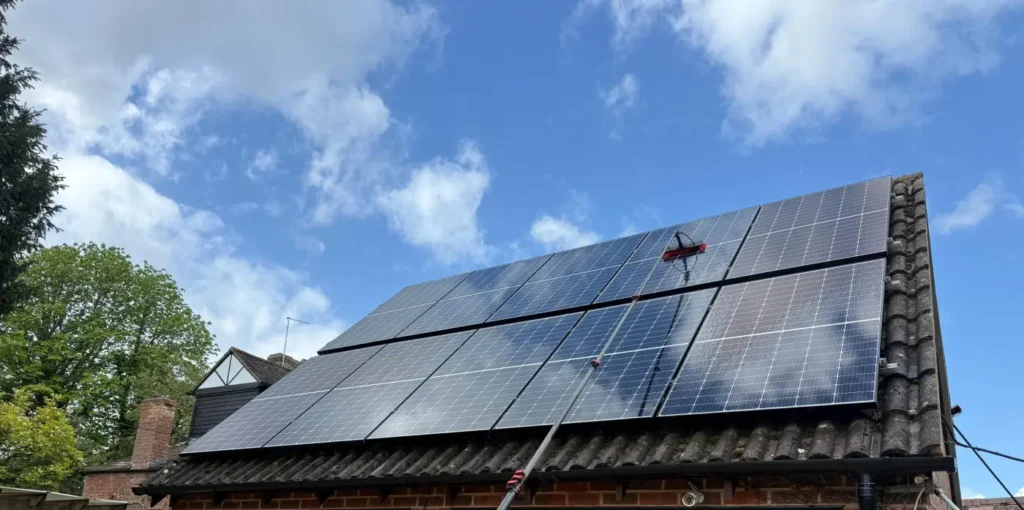
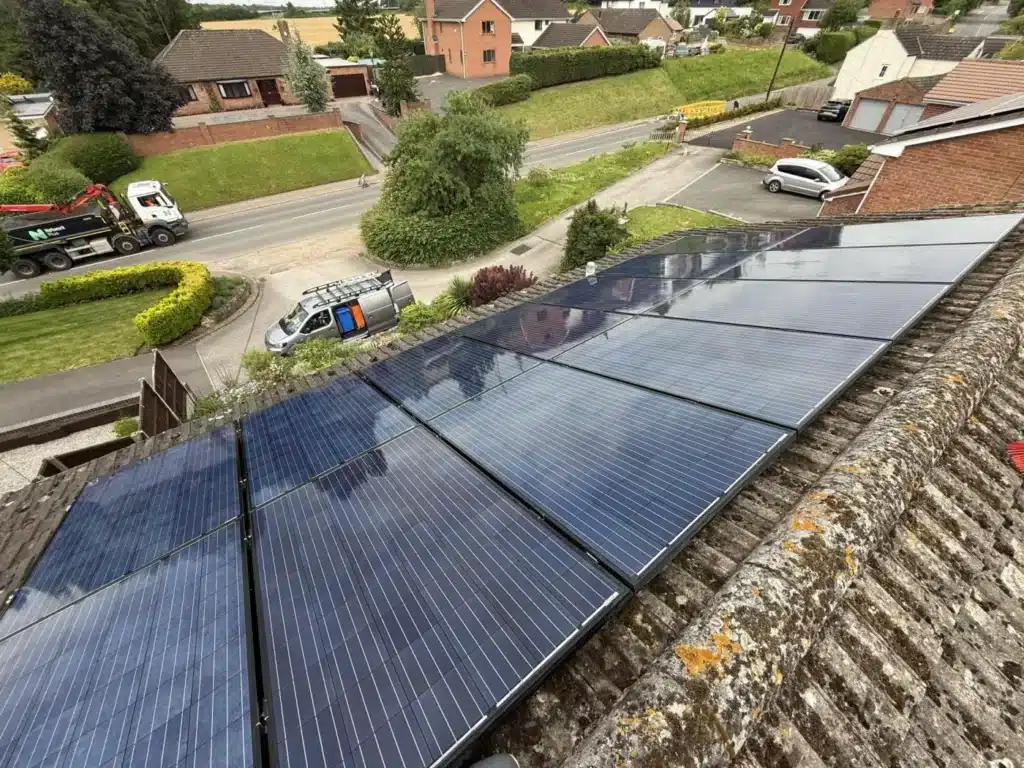
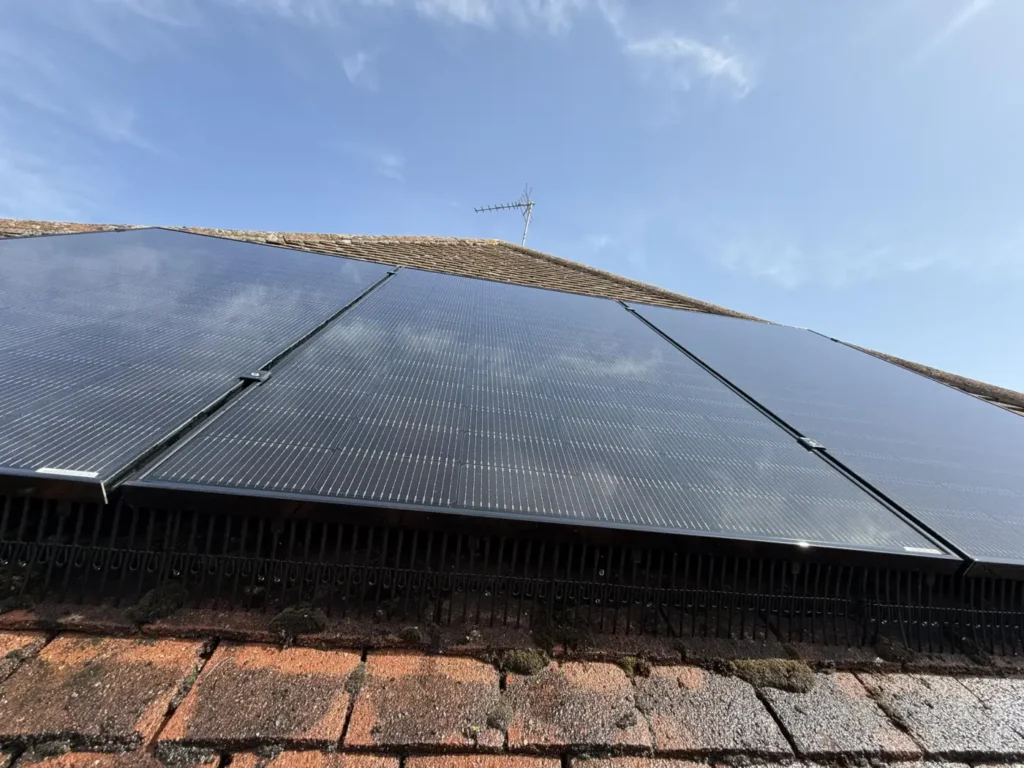
These photographs show residential solar installations cleaned by Crystal Clear Gloucestershire, including the soft water-fed brush and purified-water approach used to treat the glass carefully.
How often should solar panels be checked?
There is no single cleaning interval that suits every property. It is sensible to inspect the panels periodically and look for:
- Visible bird fouling
- Heavy dust or pollen
- Leaves trapped around the panels
- Uneven areas of contamination
- Persistent water spotting
- A noticeable and unexplained change in system output
Panels close to trees, busy roads, farmland or areas with significant bird activity may need attention more frequently.
Cleaning should not be confused with electrical maintenance. The wider solar installation should also receive appropriate inspections from a suitably qualified professional, particularly if there are signs of damaged cables, loose fittings, corrosion or electrical faults.
Is professional solar panel cleaning worthwhile?
Roof-mounted solar panels can be difficult and potentially dangerous to reach. A professional service removes the temptation to work from an unsuitable ladder, walk on the modules or use equipment that could cause damage.
A specialist cleaner should use methods intended for delicate exterior glass, including suitable brushes and purified water. They should also assess access and visible panel condition before beginning work.
Professional cleaning cannot guarantee a particular increase in electricity generation because every system and level of contamination is different. Its purpose is to remove material obstructing the panel surface while treating the installation carefully.
Professional solar panel cleaning in Gloucestershire
Crystal Clear Gloucestershire provides professional solar panel cleaning for homes and small businesses throughout Gloucester, Cheltenham and the surrounding areas.
We use specialist equipment and purified-water cleaning methods to remove dirt, pollen, bird droppings and surface contamination without pressure washing or abrasive chemicals.
If your panels are visibly dirty or difficult to access safely, we would be happy to assess the installation and provide a free, no-obligation quotation. Learn more about our solar panel cleaning service or use the options below to get in touch.
Gloucestershire solar panel cleaning
Request your free quotation
Tell us about your property and upload photos of the panels to help us assess the access and cleaning required.